
Middle East Bridge Crane
20T Double Girder Overhead Crane
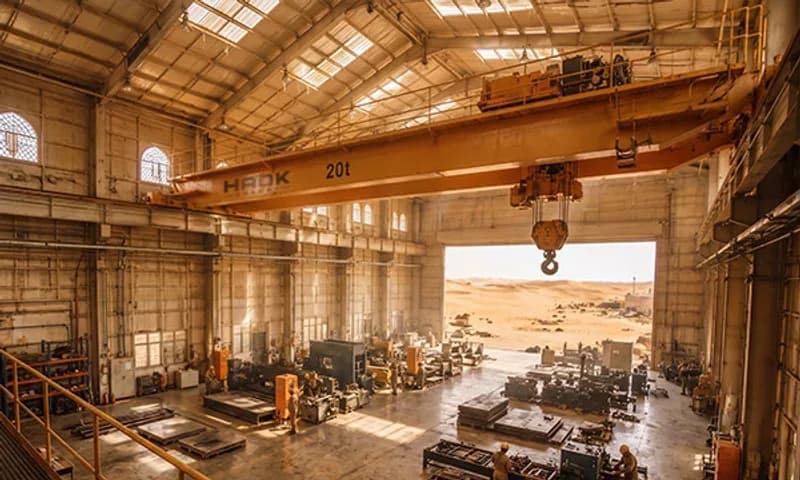
Dust protection, cooling, and inspection access were coordinated for a hot industrial workshop.
HAOKCRANES Environmental Protection and Electrical Engineering Group
Project engineeringDust protection, thermal derating, cooling, filtration, and service access review
HAOKCRANES Electrical, Thermal, and Dust Protection Review Group
Technical review | 2026-06-14Enclosure protection, cooling performance, electrical safety, commissioning, and contamination maintenance
The Problem
The workshop needed a reliable overhead crane for heavy assembly in an environment affected by high ambient temperatures and fine dust. Cooling, enclosure protection, seals, filtration, component derating, and cleaning access had to work together without trapping heat inside the equipment.
Our Approach
The double girder crane configuration used protected electrical enclosures, labyrinth sealing, additional cooling capacity, filtered cabin ventilation, service platforms, and inspection access around high-maintenance components. The maintenance schedule was adjusted for contamination severity.
From Selection To Handover
- Ambient temperature and motor or control-panel derating
- Dust ingress paths around gearboxes, brakes, bearings, and cabinets
- Cooling airflow that does not compromise enclosure protection
- Cabin filtration, visibility, and maintainability in dusty conditions
- Double girder overhead crane with trolley lifting mechanism
- Protected motors, electrical cabinets, seals, filters, and cooling system
- Cabin filtration, access platforms, lighting, and operational safety devices
- Commissioning tools, maintenance consumables list, and service documentation
Acceptance checks covered enclosure sealing, cooling performance, filter condition, brake operation, travel alignment, load testing, emergency stops, and inspection access under representative workshop conditions.
- Condition-based filter cleaning and replacement using pressure or airflow checks
- Seal, breather, lubricant, bearing, and electrical cabinet inspections
- Thermal scanning of terminals, drives, motors, and braking resistors
- More frequent cleaning after dust storms or heavy workshop contamination
Prepare Your Crane Requirements
Use the worksheet to organize the technical data our engineering team needs for an initial review.
Record capacity, ambient conditions, dust exposure, duty, controls, and site interfaces before technical review.
Project Outcome
Protection and cooling requirements were reviewed as one system
Filter and seal inspections were included in routine maintenance
Thermal inspection points were defined for electrical components
Service access was incorporated into the crane arrangement
Interested in a Similar Solution?
Contact our team to discuss your project requirements and get a tailored proposal.